Grandkids, Travel, or Just Paying the Bills? Why Rural Retirees Are Being Forced to Choose
Rural retirement was supposed to be about freedom, but rising costs and family needs are forcing a tough choice. Is there a way to keep the farm and the lifestyle?
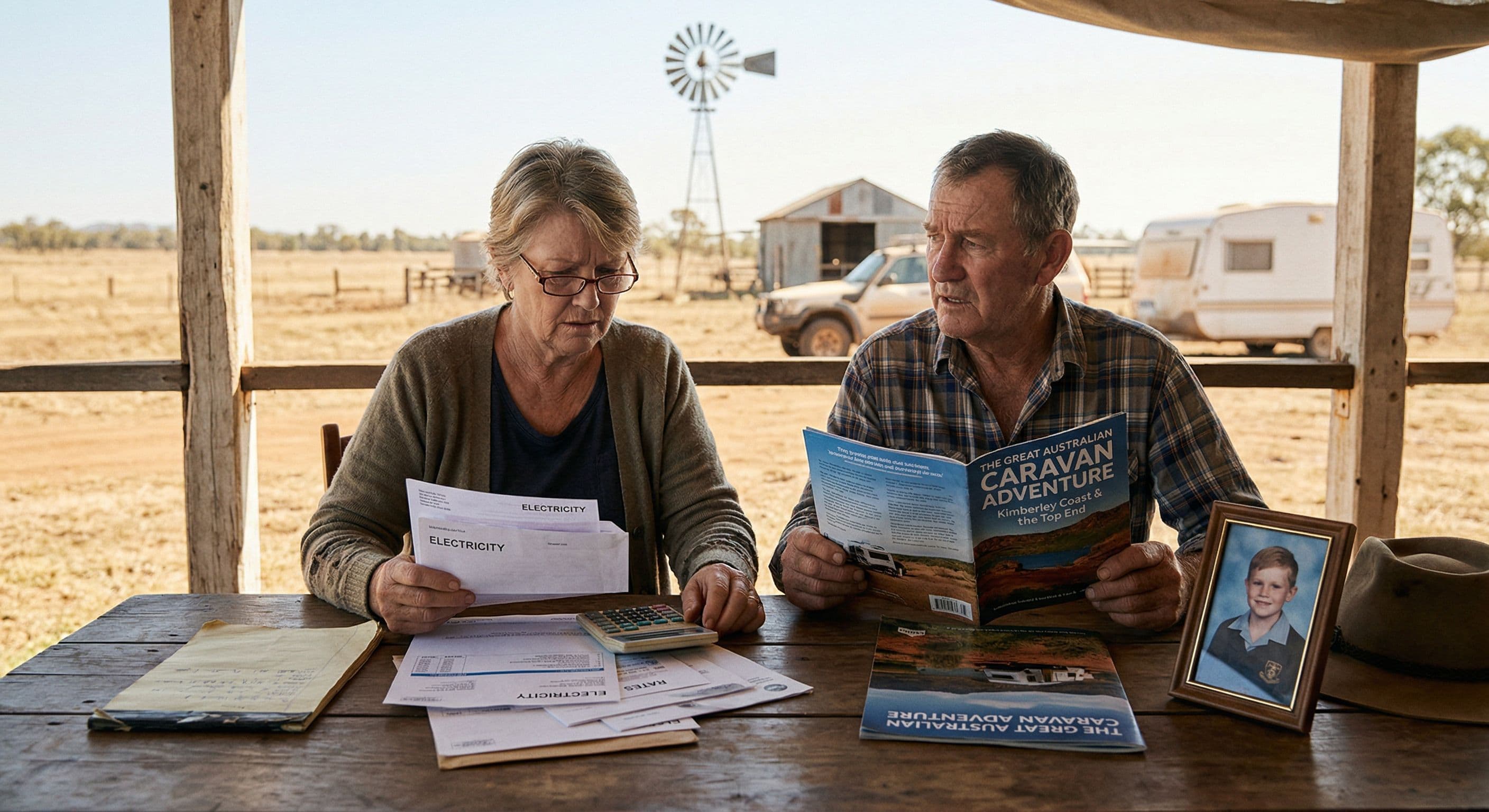
The dream was simple. After decades of early mornings, dusty paddocks, and the relentless cycle of the seasons, retirement was meant to be the reward. It was supposed to be the time for the big caravan trip around the block, the quiet afternoons on the veranda, and the joy of being the "Bank of Nan and Pop" without the constant stress of the bottom line. But as we move through 2026, many of Queensland’s rural retirees are discovering that the dream is being squeezed by a new and uncomfortable reality.
Inflation has not been kind to the bush. While the city feels it at the checkout, the rural retiree feels it in the fuel tank, the electricity bill for the pumps, and the soaring cost of keeping a legacy property maintained. When you add the emotional weight of wanting to help the next generation get a foot on the property ladder or finish their education, the financial math starts to look impossible. Many are finding themselves asset-rich but cash-poor, standing on land that has grown in value while their daily bank balance tells a different story.
The Rise of the Bank of Nan and Pop
It is a common story across the Darling Downs and up through the Burnett. A grandson needs help with a university bond. A daughter is trying to buy her first home in a market that seems to move faster than a summer storm. For rural families, the desire to provide this support is deeply ingrained in the culture of the land. We build for the future. We work so that those who come after us have it a little easier.
However, providing that support in 2026 often comes at a steep personal cost. Recent trends show that many Australians are delaying their retirement by over half a decade just to keep the family safety net intact. For a farmer, "delaying retirement" often means another five years of physical toll that the body might not be ready for. It means putting off the travel plans that were meant to happen "someday." When you choose to pay for a grandchild’s tuition or a family member’s emergency, you are often choosing to give up your own freedom.
There is also the complexity of the Age Pension. Many aren't aware that "gifting" large sums to family can actually impact your pension entitlements if you exceed certain limits. This creates a double-bind: you want to help your kids, but doing so might reduce the very income you rely on to keep the farm running. It’s a delicate balancing act that leaves many feeling like they are walking a tightrope every single month.
The Hidden Costs of Rural Freedom
Even if you aren’t funding the next generation, the cost of simply "being" in rural Australia has shifted. We have seen utility projections suggest double-digit increases in electricity costs, and water and gas are trailing close behind. For a retired couple on a fixed income, these aren't just numbers on a page: they are the difference between turning on the air conditioning during a heatwave or sitting in the dark.
Then there is the travel. For many, retirement was the ticket to see the parts of Australia they only ever saw on a map. But with passport fees rising and the cost of domestic travel, from diesel to caravan park site fees, climbing, that "lap of the map" is becoming a luxury many feel they can no longer justify. The choice becomes binary: do we fix the fence and pay the rising rates, or do we take the trip?
Beyond the obvious bills, there are the "hidden" expenses that creep up on you. Insurance premiums in regional Queensland have seen significant shifts, and banking fees for accounts that used to be "free" are now eating into the grocery budget. Even the cost of basic services, like getting a plumber to drive out to the home, has risen as fuel and labor costs hit regional contractors. It all adds up to a situation where the "safety margin" in a retirement budget is thinner than it has ever been.
The Asset Rich, Cash Poor Dilemma
The most frustrating part of this squeeze is the irony of it. Most rural retirees are sitting on a stable value that would make most city dwellers envious. Land values have remained resilient, representing years of hard work and careful stewardship. Yet, because that value is locked in the soil, it doesn't help pay for a flight to see the grandkids or a new set of solar panels for the homestead.
Traditional options have always felt like a surrender. You could sell the lot and move to a unit in town, but for many, leaving the land is losing their identity. The thought of a small backyard and neighbors three feet away is enough to make any lifelong rural resident shudder. You could subdivide, but that often means dealing with a mountain of red tape and losing the privacy you’ve spent a lifetime cultivating. There has long been a missing middle ground: a way to unlock a value from the land without having to say goodbye to it.
The Mental Toll of the Quiet Austerity
When a retiree is forced to choose between "Grandkids, Travel, or Just Paying the Bills," the mental toll is significant. No one wants to be the grandad who can't help, but no one wants to be the one who can't afford their own rates. This internal conflict often leads to a phenomenon we call "quiet austerity." This is where retirees cut back on medicine, social outings, and basic comforts to maintain a facade of financial stability for their family.
They stop going to the local morning teas. They skip the doctor’s visit for that nagging hip because the "gap fee" is too high. They tell their kids they "just don't feel like traveling this year" when the truth is the caravan hasn't had a service in three years because the money went to a niece's school books. It is a quiet struggle, often hidden behind a stoic rural exterior, but it is a struggle nonetheless. It is a choice no one should have to make.
"Your retirement should be a reflection of your hard work, not a continuation of the struggle. Choosing between a grandson’s education and your own comfort is a choice you don't have to make alone."
The Path Forward: Keep the Farm, Gain the Freedom
Fortunately, the conversation around rural retirement is changing. We are seeing a move away from the "all or nothing" approach of selling the farm. New strategies are emerging that focus on equity and occupancy, allowing landholders to stay in their homes while accessing the capital they need to live the life they planned.
At Rural Retirement Trust, we believe that the land you’ve worked should work for you. We help families unlock significant capital from their property, providing the financial breathing room needed to support the grandkids, take that trip, and never worry about the utility bill again. We do this through a model designed to support your independence, allowing you to stay on your land for as long as you wish. This isn't about debt or complex interest; it's about recognizing the value you've already built and letting you use it.
If you're feeling the squeeze, a confidential conversation with our local Queensland specialists could help you find a path that lets you say "yes" to family and the freedom you've earned. After all, you’ve spent your life looking after the land. It’s time the land looked after you.
"Choosing between a grandson’s education and your own comfort is a choice no one should have to make. Unlocking the value in your land can provide the exact financial breathing room needed to keep the lifestyle you love."
Discover how much capital you could unlock from your land today to fund your family's future and your own freedom.