The True Cost of Downsizing: Why Moving to Town Isn't Always the Answer
Many see selling the farm as the only path to a comfortable retirement. But the emotional and hidden financial costs of moving to an urban center can be staggering.
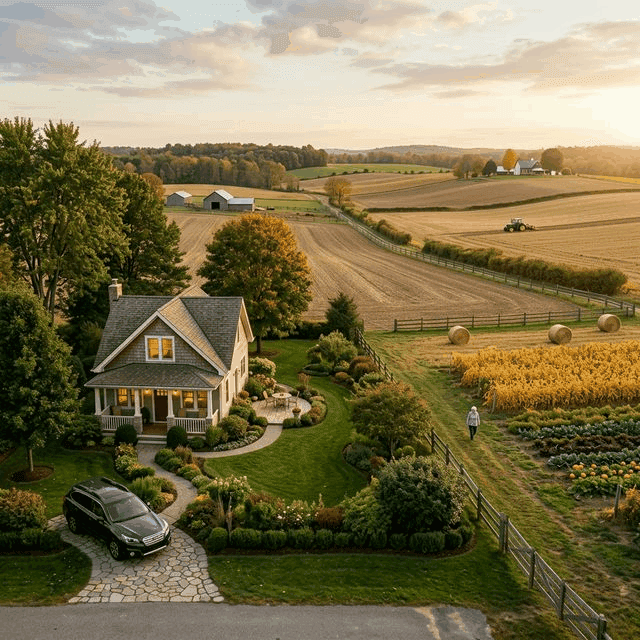
The decision to sell a rural property you have worked on for decades is rarely easy. While glossy real estate brochures and well-meaning friends often push the "downsize and relax" narrative, the reality of transitioning from acres of open land to a suburban block can be deeply jarring. What is often pitched as a path to a stress-free retirement can quickly become a complex web of unexpected expenses and profound emotional loss.
In 2025, the rhetoric around downsizing has reached a fever pitch. With regional property prices remaining robust, the temptation to "cash out" is understandable. However, many farming families are discovering that the true cost of leaving the land extends far beyond the emotional toll of saying goodbye to their sanctuary. The financial reality of the "downsizing trap" is often hidden until the ink is dry on the contract, leaving retirees with significantly less capital than they anticipated.
The Hidden Financial Trap
When calculating the proceeds of a farm sale, a common mistake is focusing purely on the headline sale price. It is easy to look at a high valuation and assume that amount will directly transfer to your retirement savings. However, the path from sale entirely to a new home is fraught with significant deductions that quickly erode your anticipated nest egg.
First, there are the immediate transaction costs. Real estate agent commissions, legal fees, and marketing expenses can consume a surprising percentage of the sale price. Then, there is the often-overlooked sting of Capital Gains Tax for properties not fully exempt under primary production or main residence rules.
The financial drain does not stop there. Purchasing a new home in a popular retirement town or coastal hub comes with its own set of hurdles. Stamp duty on a new purchase can be exorbitant, and the rapidly inflating prices of desirable "downsizing" real estate mean you might be paying a premium for a significantly smaller footprint.
"We sold our 50-acre block to move closer to the coast, thinking we would have a massive safety net. After agent fees, taxes, and purchasing our much smaller villa, our actual cash surplus barely covered five years of living expenses. We gave up our space and our community for a financial buffer that eroded almost immediately."
The Impact on the Age Pension
Another hidden cost that catches many retirees off guard is the impact of a sale on Age Pension eligibility. Often, the family farm, regardless of its size if it has been your primary residence for over 20 years, may be exempt from the Centrelink asset test.
When you sell the farm, that exemption vanishes. If the proceeds from the sale are not fully reinvested into a new primary residence - which is the goal for many seeking a cash surplus - those funds suddenly become assessable assets. We have seen countless examples where a family sells their farm, only to find that their newly acquired cash surplus disqualifies them from the Age Pension, forcing them to draw down on their capital much faster than anticipated.
The Emotional Toll and Loss of Community
More profound than the financial hit is the loss of purpose and identity. Moving from a sprawling property to a suburban street often means a radical shift in daily routine. There are no longer paddocks to check, no large sheds for long-term projects, and the physical distance between neighbours is suddenly measured in feet rather than kilometers.
Furthermore, selling the farm often means leaving a tightly knit rural community. The social networks built over decades, the local agricultural shows, the community hall meetings, the shared history with neighbours, are not easily replicated in a new town. The isolation that can follow a move is a recognized, yet rarely discussed, cost of downsizing.
An Alternative: The Power of Lifetime Occupancy Contract
The Rural Retirement Trust was built specifically to address this complex problem. We recognize that the desire to unlock capital for retirement is valid, but we believe that forcing rural families off their land to achieve it is unnecessary and often detrimental.
Through an Lifetime Occupancy Contract, you can completely bypass the downsizing trap. Our model is designed to support families who want to tap into the market value of their property today, unlocking significant capital, without ever having to surrender the sanctuary they have built. You avoid the costs of moving, the exorbitant stamp duty on a new purchase, and the emotional trauma of leaving your community. Instead, you remain in your home, protected by a legally registered agreement that guarantees your residency for life..
If you are realizing that the true cost of downsizing might outweigh the benefits, a confidential conversation with a Rural Retirement Trust specialist can help you explore how an Lifetime Occupancy Contract might provide the capital you need without leaving your home. We are dedicated to providing alternatives that protect both your financial future and your connection to the land.
"The Rural Retirement Trust was built specifically to address the complex problem of the downsizing trap, ensuring you can unlock capital without leaving your home."
Before you commit to massive agent fees and stamp duty, let's explore how you can stay comfortably on the land you love.